
 Key Takeaways:
- Repetition in Chinese nursery rhymes helps children remember vocabulary and recognise simple language patterns.
- Singing supports tone awareness and pronunciation by making pitch differences easier to hear and imitate.
- Nursery rhymes strengthen listening comprehension through repeated sounds, predictable patterns, and simple lyrics.
- Songs also introduce cultural meaning, helping children connect language with familiar routines and contexts.
- Parents can reinforce learning at home by using nursery rhymes during everyday routines.
Introduction
For many young children, language begins with sound before it becomes something they can read, explain, or analyse. This is what makes Chinese nursery rhymes valuable in early Chinese learning. Through melody, rhythm, and repetition, nursery rhymes create a natural way for children to hear words, recognise patterns, and become familiar with how the language flows.
In the preschool years, children are still building listening skills, vocabulary, and confidence with spoken Chinese. Music introduces Chinese in a way that feels approachable, helping children absorb language much like they absorb songs, routines, and everyday speech at home.
Keep reading to explore how nursery rhymes can support early language learning naturally.
Why Music Supports Early Chinese Learning
Young children often respond strongly to rhythm and melody. The brain processes music and language in closely related ways, which means songs can support how children identify sounds, syllables, and repeated speech patterns.
Songs also introduce language in a way that feels structured without seeming demanding. Through melody and repetition, children begin to notice how certain words sound, how phrases are grouped, and how patterns appear across different lines.
How Rhythm and Repetition Help Vocabulary Grow
Another helpful feature of nursery rhymes is repetition. Many rhymes repeat the same words and phrases several times, giving children more chances to hear and remember them. Over time, this repeated exposure helps children:
- Remember new vocabulary more easily
- Recognise simple sentence structures
- Become familiar with common nouns, verbs, and descriptive words
This is one reason nursery rhymes are often effective in early language settings. Repetition gives children time to process what they hear without feeling rushed, while rhythm helps those words stay in memory for longer.
Why Chinese Nursery Rhymes Help with Tones and Pronunciation
Mandarin is a tonal language, so children need to hear pitch differences clearly from an early stage. Chinese nursery rhymes support this by pairing words with melody, making tonal changes easier to notice and imitate.
When children sing regularly, they begin to:
- Hear pitch changes more clearly
- Copy tones with greater accuracy
- Internalise tone patterns in a more natural way
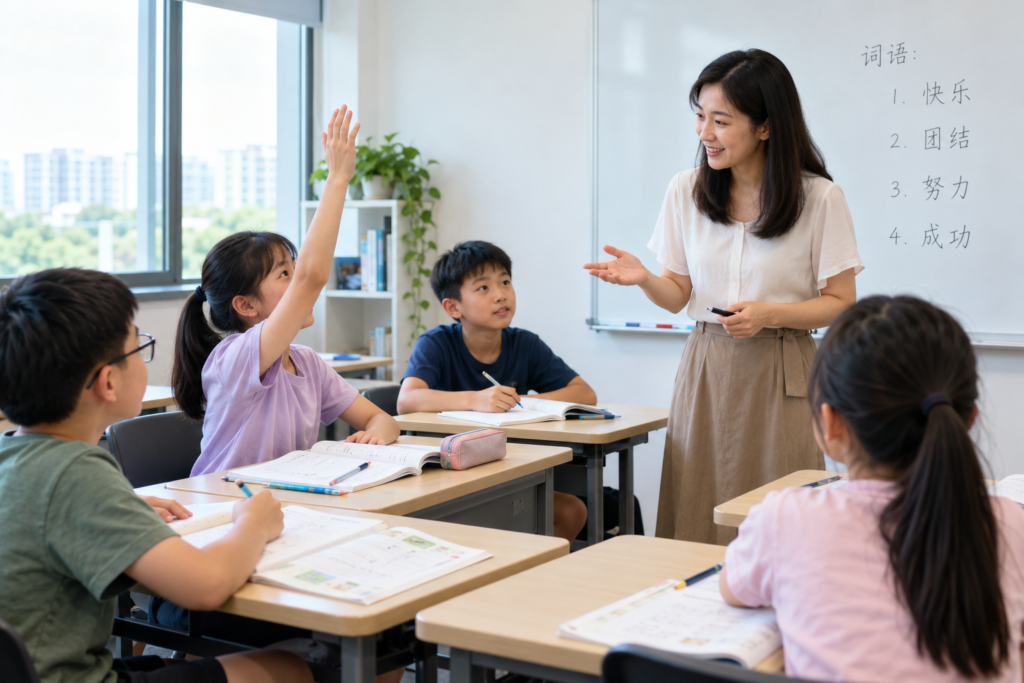
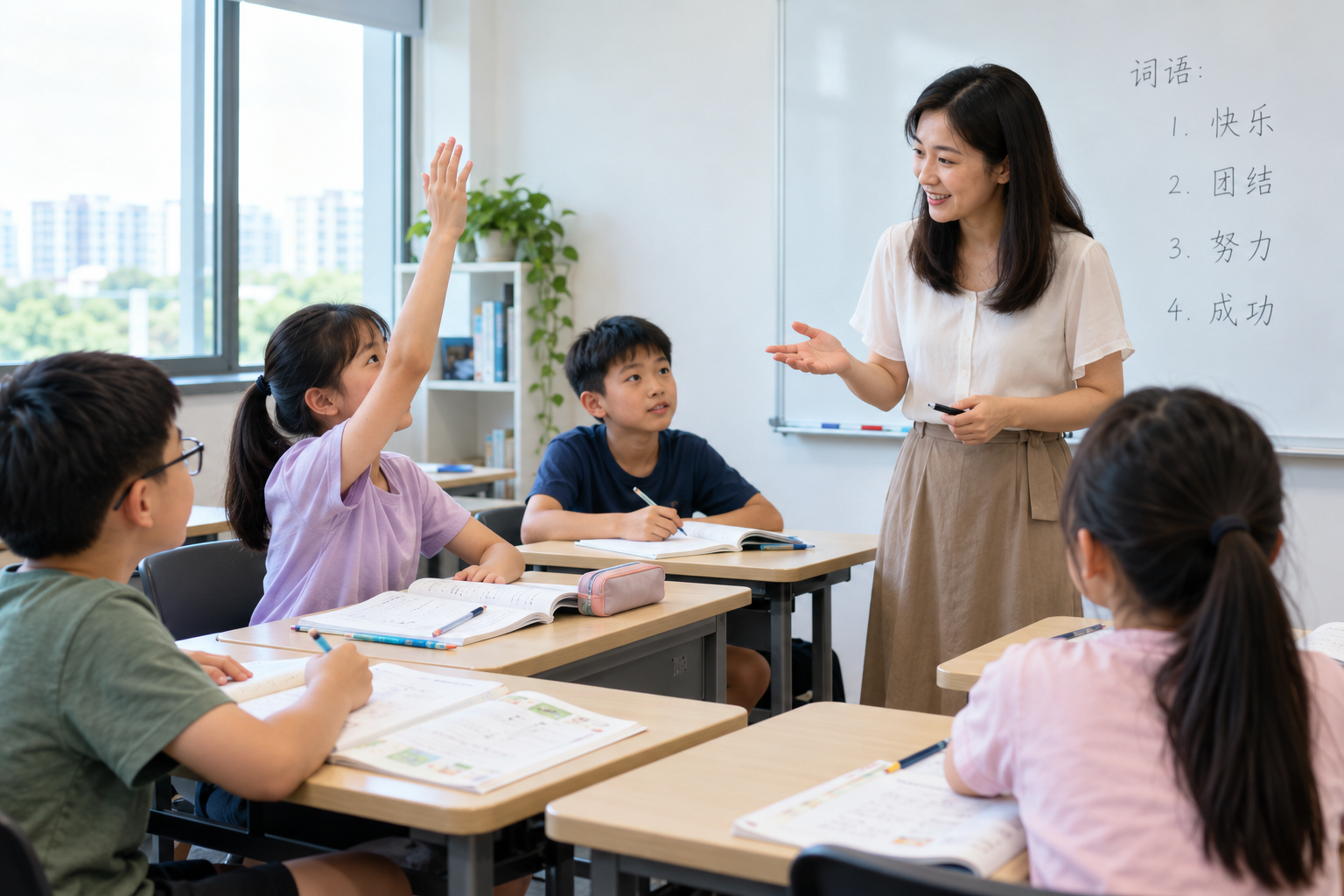
This does not replace structured teaching, but it can make pronunciation practice feel less formal and more familiar. For instance, in a Chinese enrichment class for K1, N2, and K2, a teacher uses a nursery rhyme with repeated words such as colours. The teacher may then guide children to listen first, repeat line by line, and then sing along as a group. This repeated exposure helps children hear how certain syllables should sound and notice pitch changes more clearly. This kind of exposure can support children who are still developing confidence in speaking and listening.
Strengthening Listening Comprehension Through Songs
Nursery rhymes also help children become better listeners. Repeated sounds, predictable patterns, and simple storylines within lyrics encourage children to pay attention to what they hear and anticipate what comes next.
This can support their ability to:
- Follow spoken instructions
- Understand familiar phrases in context
- Recognise known words in new situations
Listening comprehension is an important part of early Chinese learning. Before children can respond confidently, they often need repeated opportunities to hear the language used in a clear and structured way.
Music Also Carries Cultural Meaning
Many nursery rhymes reflect daily routines, cultural references, or simple values that are part of Chinese language learning. Through these songs, children begin to connect vocabulary with situations, behaviours, and ideas that carry meaning within the language.
At the same time, they also hear how language is used within familiar cultural settings and everyday situations. For preschool Chinese enrichment classes in Singapore, this cultural layer can support learning in a more meaningful way.
When songs are paired with storytelling, guided discussion, visuals, or simple follow-up activities, children are better able to connect what they hear with what it means. For example, a rhyme about family, daily routines, or shared behaviours allows teachers to introduce vocabulary alongside cultural understanding, rather than teaching words in isolation.
How Parents Can Support by Using Nursery Rhymes at Home
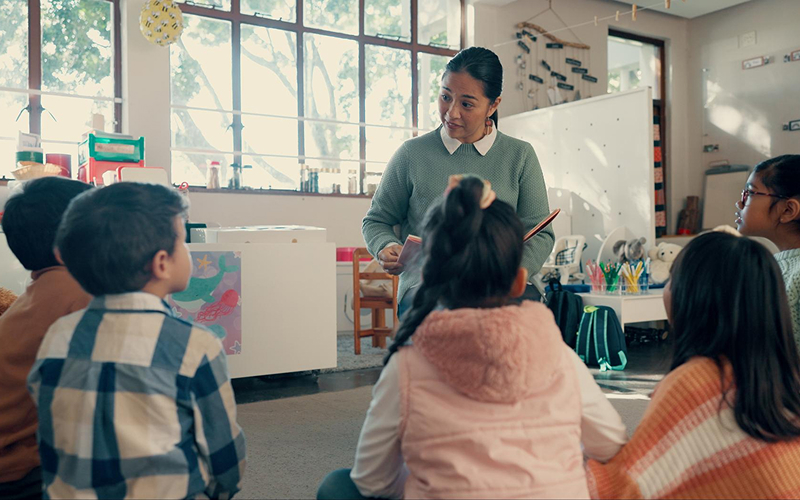
Parents do not need a rigid schedule or elaborate teaching plan to make nursery rhymes part of everyday learning. In the preschool years, language development often happens through repeated exposure, familiar routines, and small moments of interaction throughout the day. This means even simple habits can contribute meaningfully to how children absorb Mandarin over time.
Helpful ways to introduce nursery rhymes at home include:
- Playing Chinese songs during daily routines
- Singing together before bedtime
- Pairing songs with picture books
- Repeating favourite rhymes across the week
These habits give children regular exposure to spoken Chinese in a relaxed setting, which can reinforce what they learn in class. When songs are repeated across familiar routines, children have more opportunities to hear the same sounds, words, and phrases in a low-pressure environment.
How Choice Hua Sheng Supports Natural Language Absorption
At Choice Hua Sheng Education Centre, Chinese nursery rhymes can be paired with interactive storytelling and comprehension-based activities to make language exposure more meaningful. Children listen, sing, and respond to music-based tasks that support pronunciation, vocabulary, tone awareness, and reading readiness.
Through our Chinese enrichment class for preschools, children are supported through structured guidance, interactive lessons, and progress tracking for both students and parents. This helps create a learning process that feels clear, consistent, and purposeful.
Get in touch to learn more about our structured programmes.



 Choice Hua Sheng