

Key Takeaways:
- PSLE Chinese composition themes are built around common real-life situations such as responsibility, friendship, challenges, and school life.
- Useful phrases (好词好句) help students express ideas more clearly, naturally, and effectively in writing.
- Each theme provides ready-to-use expressions that match typical exam scenarios and improve narrative quality.
- Understanding meaning + usage is more important than memorisation alone for stronger composition performance.
- Practising good phrases for Chinese compo helps students use them more confidently in exam writing.
Introduction
For many students, PSLE Chinese composition can feel demanding, especially when they are unsure how to turn their ideas into clear and engaging writing. On top of simply completing the task, examiners are looking for writing that is accurate, well-organised, and expressive. By using good phrases for Chinese compo, students can better shape their ideas into clearer, more natural and impactful sentences. Instead of memorising sentences blindly, students benefit more when they understand how phrases are used in different themes and contexts. Some parents turn to Chinese language tuition to help their children build stronger writing foundations through structured, guided practice. In this article, we explore a range of good phrases for PSLE Chinese composition themes, organised by common topics students encounter in exams. Each section is designed to help learners understand when and how to use them effectively.Good Phrases by Common Themes
1. Responsibility and Discipline (责任 / 纪律)
In stories involving school duties, leadership, or correcting behaviour, students can use phrases that express responsibility and self-discipline. For example, 义不容辞 means a duty one cannot refuse, while 责无旁贷 means responsibility cannot be avoided. These phrases show a strong sense of duty in writing. Other useful expressions include 自律是一种看不见的力量 (self-discipline is an invisible strength), 严格要求自己 (holding oneself to high standards), and 从错误中吸取教训 (learning from mistakes). Sample sentences:- 作为班长,我义不容辞地帮助老师处理班级事务。(As a class monitor, I cannot refuse the responsibility to help the teacher)
- 面对问题,他责无旁贷地站出来承担责任。(He could not avoid the responsibility and stepped forward)
- 她相信自律是一种看不见的力量,因此每天坚持复习。(Self-discipline is an invisible strength, so she revises daily)
- 他严格要求自己,在每次考试后都会反思表现。(He holds himself to high standards and reflects after every exam)
- 她从错误中吸取教训,不断改进自己的写作。(She learns from mistakes and improves her writing)
2. Friendship and Empathy (友谊 / 同理心)
When writing about friendship or helping others, students can use phrases that reflect care and understanding. 雪中送炭 means helping someone in urgent need, while 同甘共苦 refers to sharing both joy and hardship. These expressions highlight emotional support between people. 设身处地为别人着想 (putting oneself in others’ shoes) and 友谊是一盏温暖的灯 (friendship is a warm light) are also useful for emotional storytelling. Sample sentences:- 在朋友最困难的时候,他雪中送炭地伸出援手。(Helping someone in urgent need when they need it most)
- 他们一路同甘共苦,共同面对生活的挑战。(They share both joy and hardship together)
- 她总是设身处地为别人着想,因此很受同学欢迎。(She is popular as she always puts herself in others’ shoes)
- 在我失落的时候,我感受到友谊是一盏温暖的灯。(When feeling depressed, friendship is a warm light that gives me comfort)
3. Overcoming Challenges (克服困难)
This theme is commonly used in PSLE compositions involving exams, sports events, or personal growth experiences. Students are often required to describe moments where they face difficulties and show determination, perseverance, and resilience in overcoming them. For instance, 迎难而上 means facing difficulties bravely, while 坚持就是胜利 means perseverance leads to success. 咬紧牙关 describes pushing through hardship, and 突破自我 refers to breaking personal limits. These phrases help build strong narrative development in compositions. Sample sentences:- 在考试压力下,他依然迎难而上,努力完成每一道题目。(He faced the difficulties bravely and worked hard to complete every question)
- 老师鼓励我们坚持就是胜利,不要轻易放弃。(The teacher encouraged us that perseverance leads to success and not to give up easily)
- 比赛最后阶段,她咬紧牙关坚持跑完全程。(In the final stage of the race, she gritted her teeth and persisted to finish the whole distance)
- 通过不断训练,他终于突破自我,取得了更好的成绩。(Through continuous training, he finally broke through his limits and achieved better results)
4. Honesty and Values (诚信 / 品德)
This theme centres around moral choices, such as returning lost items, telling the truth, or making decisions that reflect integrity. Students are expected to show a clear understanding of honesty, responsibility, and good character through their writing. 一言九鼎 means a promise carries great weight, while 拾金不昧 refers to returning lost property without keeping it. These show strong moral character. Meanwhile, 诚实是最美的品德 (honesty is the most valuable virtue) and 君子坦荡荡 (an honourable person is open and upright) are also commonly used in value-driven writing. Sample sentences:- 他一言九鼎,从不轻易许下做不到的承诺。(His words carry great weight. He never makes promises he cannot keep)
- 她拾金不昧,把捡到的钱包交给了老师。(She returned the lost wallet without keeping it)
- 他一直相信诚实是最美的品德,因此从不说谎。(Honesty is the most valuable virtue, so he never lies)
- 君子坦荡荡,他做事光明磊落,从不隐瞒真相。(He is an honourable person, being upright and acting honestly)
5. Helping Others (助人为乐)
This theme focuses on describing acts of kindness, community support, or moments of helping strangers and friends. Students can use expressions that show empathy, generosity, and the positive impact of helping others. In this context, 助人为快乐之本 can be used to describe how helping others is the source of happiness. Meanwhile, 伸出援手 means to lend a helping hand. 无私奉献 refers to selfless contribution, and 小小的善举,也能温暖人心 means small acts of kindness can warm the heart. Sample sentences:- 他一直相信助人为快乐之本,因此常常主动帮助同学。(He believes that helping others is the source of happiness, so he is always helpful)
- 看到老人跌倒,她立刻伸出援手把他扶起来。(She immediately lent a helping hand to help an elderly person up)
- 志愿者们无私奉献,在假期里协助社区活动。(The volunteers made selfless contributions by helping with community activities during the holidays)
- 一个小小的善举,也能温暖人心,让对方感到关怀。(A small act of kindness can warm the heart and make others feel cared for)
6. Personal Growth (成长 / 反思)
Reflection-based compositions often require students to describe moments of learning, change, or self-improvement. This theme focuses on how individuals respond to challenges, reflect on their actions, and grow through experience. In this theme, 成长的道路上布满荆棘 describes a path of growth is full of challenges, while 反思自己的行为 means reflecting on one’s actions. 在经历中学习 refers to learning through experience, and 懂事的瞬间 describes a moment of maturity. Sample sentences:
- 成长的道路上布满荆棘,但他依然坚持不放弃。(The path of growth is full of challenges, but he still perseveres)
- 考试后,她开始反思自己的行为并努力改进。(After exams, she began to reflect on her actions and work on improving)
- 他相信在经历中学习,才能真正变得更成熟。(He believes that learning through experience leads to true growth)
- 那一刻,他突然有了懂事的瞬间,明白了父母的用心。(At that moment, he realised the meaning of maturity and understood his parents’ efforts)
7. School Life and Teamwork (校园生活 / 团队精神)
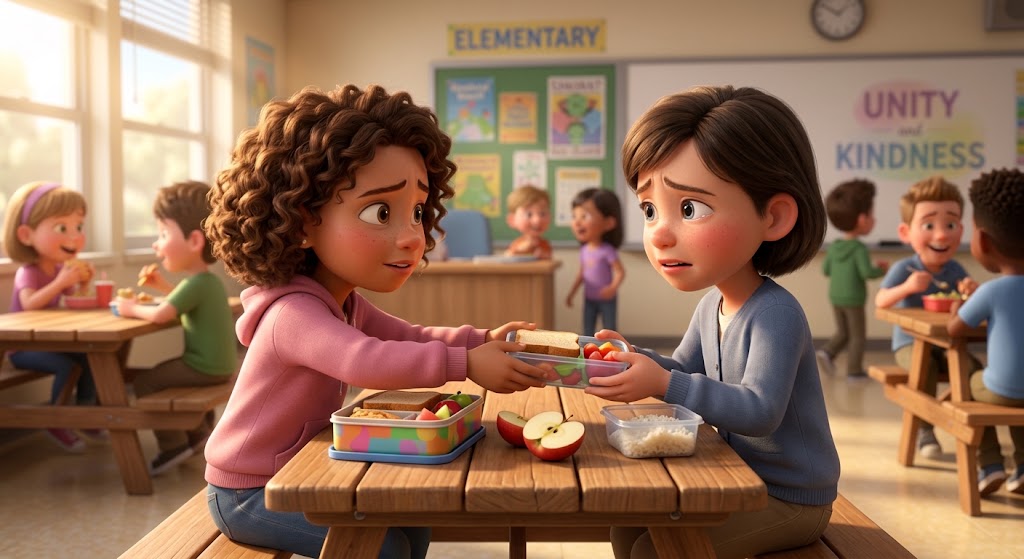
For school-related topics, cooperation is often the key idea. Strong writing in this area highlights responsibility and the value of teamwork in achieving success within a school setting. 团结就是力量 means unity is strength, while 同学之间互相扶持 refers to students supporting one another. 为了共同的目标努力 means working towards a shared goal, and 校园生活丰富多彩 describes school life as colourful and enriching. Sample sentences:- 在比赛中,大家都明白团结就是力量,因此齐心协力完成任务。(Everyone understood that unity is strength, so they worked together to complete the task)
- 班级活动中,同学之间互相扶持,共同完成表演。(During the class activity, students supported one another and completed the performance together)
- 为了共同的目标努力,他们每天放学后一起留下来练习。(They worked towards a shared goal by staying back after school every day to practise together)
- 他觉得校园生活丰富多彩,每天都有新的学习和体验。(He feels that school life is enriching, with new learning and experiences every day)
8. Accidents and Emergencies (意外 / 紧急情况)
This theme often covers unexpected events, such as accidents, emergencies, or crisis situations. Students need to describe tension, urgency, and quick responses clearly. 慌乱中保持冷静 means staying calm in chaos, while 心跳如擂鼓般加速 describes a racing heartbeat. 危机时刻 refers to a critical moment, and 所幸大家安然无恙 means fortunately everyone was safe. Sample sentences:- 在火灾发生时,他慌乱中保持冷静并迅速拨打求助电话。(He stayed calm in chaos and quickly called for help)
- 听到巨响的那一刻,她心跳如擂鼓般加速,不敢向前走。(At that moment, her heart was racing like a drum and she did not dare move forward)
- 危机时刻,老师立即组织学生有序撤离。(At the critical moment, the teacher immediately arranged to evacuate students in an orderly manner)
- 事故发生后检查发现,所幸大家安然无恙。(As per checking after the incident, it was fortunate that everyone was safe)




 Choice Hua Sheng