
Key Takeaways:
- One practical O-Level Chinese tip is to follow the correct format and keep responses clear.
- Use a clear structure and plan your ideas to improve composition writing.
- Build vocabulary through consistent revision to strengthen both comprehension and writing.
- For comprehension, focus on identifying keywords and answering accurately in your own words.
- Improve listening and oral skills through daily practice, focusing on clarity and confidence.
Introduction
Scoring an A1 for O-Level Express Chinese is entirely achievable with the right strategy, consistent practice, and a clear understanding of how the exam works. Many students struggle not because they lack ability, but because they approach the paper without a structured plan.
With the right O-Level Chinese tips, students can turn uncertainty into confidence and steadily improve their performance. This step-by-step blueprint breaks down the essential skills needed across all exam components, from writing to comprehension and oral.
Understanding the Chinese Exam Format
Before applying any strategies, students need clarity on what they are being tested on. The Express Chinese Language paper (1160) carries a total of 200 marks and is divided into four main components.
Paper 1: Writing (60 marks – 30%)
Section A focuses on functional writing, typically an email. Students may be required to write either a formal or informal email, with Higher Chinese including forum-style responses. Meanwhile, Section B requires students to choose one composition from three options. These usually cover narrative (记叙文), expository (说明文), or argumentative (议论文) formats.
Paper 2: Language Use and Comprehension (70 marks – 35%)
This paper tests vocabulary, grammar, and
reading skills. Students will complete cloze passages, vocabulary replacement tasks, and answer questions based on short texts such as advertisements or reports. Longer passages include both narrative and expository texts that require deeper understanding and inference.
Paper 3: Oral Examination (50 marks – 25%)
Students are assessed on reading aloud and conversational ability. They must demonstrate clear pronunciation, fluency, and the ability to express ideas confidently based on a given topic.
Paper 4: Listening Comprehension (20 marks – 10%)
This section consists of multiple-choice questions based on audio clips, including conversations, announcements, and short reports. Understanding this structure allows students to target their preparation effectively.
The Higher Chinese (1116) examination consists of 3 papers. It also carries a total of 200 marks.
Paper 1: Writing (80 marks – 40%)
This paper consists of two sections: practical writing and composition. Candidates may use dictionaries approved by the examining authority. For practical writing, they must choose 1 of 2 questions and write at least 220 Chinese characters, either as an email based on the given materials or as an online forum response based on the topic and the provided comments.
For composition, they are required to choose 1 out of 3 questions. The assessment includes writing of at least 500 Chinese characters in genres such as narrative, expository, or argumentative writing, including speeches.
Paper 2: Language Use and Reading Comprehension (80 marks – 40%)
This paper assesses language use, reading comprehension, and summary writing. It includes a cloze passage, faulty sentence correction, Reading Comprehension 1, Reading Comprehension 2, and a summary task.
In the language use section, candidates choose the most appropriate answers for the cloze passage based on the passage and context. They also correct underlined sentences with language errors.
For Reading Comprehension 1, candidates respond to questions or select the most appropriate answers based on the given passage. Reading Comprehension 2 requires candidates to answer questions based on two separate passages. The paper ends with a summary-writing task in which candidates summarise selected paragraphs from Reading Comprehension 2 into a passage of about 80 Chinese characters.
Paper 3: Oral Examination (40 marks – 20%)
This paper consists of an oral presentation and a discussion. Before the exam, candidates are given 10 minutes to watch a video clip, prepare their points, and take notes. During the exam, they must deliver an oral report of no more than 2 minutes based on the given topic and video content, followed by a discussion with the examiner about their presentation.
Express Chinese (1160) vs Higher Chinese (1116): How They Differ
Express Chinese 1160 and Higher Chinese 1116 are both O-Level Chinese subjects, but they are meant for different levels of language ability.
Express Chinese 1160 is the standard O-Level Chinese subject taken by most Express stream students. It tests core Chinese language skills across writing, language use, reading comprehension, oral communication, and listening comprehension. The writing requirements are shorter, whereas the oral exam includes reading aloud and conversation.
On the other hand, Higher Chinese 1116 is considered the more advanced version. Students who take Higher Chinese usually do not take Express Chinese separately unless required by their school or situation. This subject has longer writing requirements, more demanding reading comprehension tasks, summary writing, and an oral presentation with discussion. It emphasises expressing opinions, analysing ideas, and using the language at a higher level.
O-Level Chinese Tips: How to Score an A1
The following five steps provide a structured blueprint for success in the O-Level Chinese exam:
Step 1: Master Functional Writing for Easy Marks
Functional writing is one of the most scoring sections when done correctly, as it follows a clear structure and marking scheme. Many students lose marks not because of weak language ability, but because of avoidable formatting errors such as incorrect greetings, missing sign-offs, or inappropriate tone for the context.
To avoid these mistakes, students should memorise the structure for formal and informal emails, including appropriate greetings, tone, and sign-offs. Each paragraph should have a clear purpose and flow logically from one point to the next.
Clarity is more important than complexity. Examiners value responses that are clear, accurate, and easy to understand, as these demonstrate strong control of the language. By focusing on expressing ideas clearly and correctly, students can secure marks more consistently. This practical O-Level Chinese tip should be applied in functional writing.
Step 2: Build Strong Composition Techniques
Composition writing requires both structure and expression. Students need to organise their ideas logically while also conveying them in an engaging, relevant way. This means being comfortable writing across different formats, including narrative and argumentative essays.
To support this, using a clear five-paragraph structure helps maintain logical flow, with an introduction, three body paragraphs, and a conclusion guiding the progression of ideas. This makes planning before writing essential. Even under time pressure, students can still organise their points clearly and present them coherently.
Vocabulary is important, but it should be used appropriately. Students should focus on descriptive words and idioms that enhance meaning, as these help make their writing clearer, more engaging, and more relevant to the topic. For students who need more structured guidance, enrolling in
O-Level Chinese tuition can help reinforce writing techniques through consistent feedback and guided practice.
Step 3: Strengthen Vocabulary Through Consistent Practice
Vocabulary is the foundation of all language components, from writing to comprehension and oral. A strong vocabulary allows students to express ideas clearly and respond with greater precision during exams.
Students should revise vocabulary, idioms, and proverbs learned throughout secondary school. These components are commonly tested and expected in the exam. Familiarity with them helps students understand passages more effectively and use appropriate expressions in their writing.
Regular exposure and repetition are key. Revisiting words frequently helps move them from short-term to long-term memory, while writing sentences using new words reinforces understanding by showing how they are used in context. For students aiming to handle more advanced language demands,
higher Chinese tuition in secondary schools can further strengthen this process by reinforcing vocabulary usage in varied contexts.
Step 4: Improve Comprehension Skills Strategically
Comprehension is not just about understanding the passage. It is also about identifying what the question is asking and responding accurately in accordance with that requirement. Students must be able to identify key words, determine the required response, and find relevant information in the text.
A useful approach is to first skim the passage, then read the questions carefully. Students should highlight keywords such as names, events, or opinions before returning to the text to locate relevant details.
On top of that, answers should be written clearly and in the student’s own words unless the question requires direct quoting. Many students lose marks by copying entire sentences without addressing the question precisely.
Step 5: Strengthen Listening and Oral Skills
Listening and oral components require consistent exposure. Regular exposure to spoken Chinese helps students become more attuned to pronunciation, tone accuracy, and natural phrasing.
Building a daily habit of listening to news, podcasts, or announcements helps students recognise common vocabulary and sentence patterns more intuitively. This improves listening accuracy and builds overall confidence.
For oral exams, pronunciation and fluency are critical. Students should practise reading aloud with proper tone, pacing, and expression. Understanding the passage before reading helps convey meaning more naturally. During the conversation component, students should focus on expressing ideas clearly, as confidence often matters more than memorised responses.

Build Exam Confidence with Timed Practice
Preparation is not complete without timed practice. One of the most effective O-Level Chinese tips is to regularly attempt full papers under exam conditions, as this helps students manage time more effectively and become more comfortable with exam pressure.
After each practice, it is important to review mistakes carefully. Categorising errors, such as vocabulary, grammar, or misinterpretation, helps students identify patterns and focus their revision. This allows them to focus their revision on specific weak areas instead of studying broadly without direction.
Studying model answers is equally valuable. It provides insight into how answers are structured and what examiners expect in terms of depth and clarity. This also helps them recognise effective vocabulary use and appropriate answering techniques.
A Structured Approach to Consistent Improvement
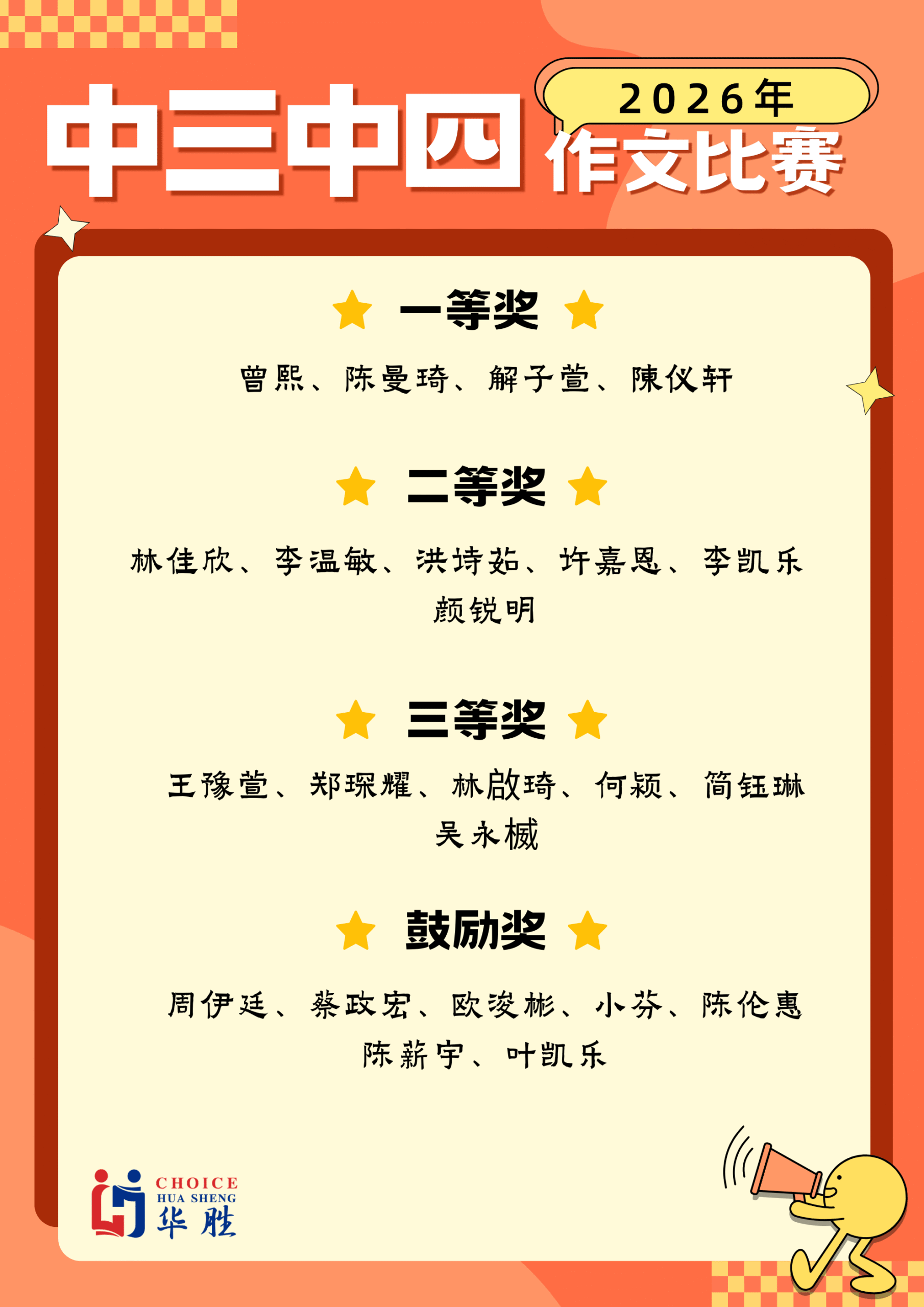
While self-study is important, structured guidance can accelerate progress. At Choice Hua Sheng Education Centre, students follow a systematic programme that closely aligns with the MOE Chinese syllabus.
Our
O-Level Chinese tuition lessons are designed to be interactive and engaging, helping students stay focused and actively participate in their learning. This approach encourages deeper understanding and improves retention of key concepts.
Besides, students practise composition writing every two weeks, covering different formats such as emails, narrative, expository, and argumentative essays. This ensures consistent exposure and gradual improvement in writing skills.
Weekly comprehension practice helps students refine their answering techniques and develop stronger analytical skills. Vocabulary and idioms are reinforced through repeated revision across each term, helping students retain and apply what they have learnt.
Get in touch and let our tutors guide you with targeted strategies.







 Choice Hua Sheng