
Key Takeaways:
- Game-based learning reduces anxiety by turning lessons into engaging, low-pressure activities.
- Active participation helps children retain vocabulary through real use, not memorisation.
- Games strengthen cognitive skills like memory, attention, and pattern recognition.
- Repetition becomes more effective when embedded in varied and interactive tasks.
- Emotional engagement improves long-term memory and builds confidence in using Chinese.
Introduction
Many young learners struggle to connect with Chinese when lessons focus mainly on repetition and memorisation. While drilling may help some students remember information temporarily, it often fails to build real understanding, confidence, or long-term recall. Game-based learning provides a more engaging and effective approach. It allows children to actively interact with the language while developing key cognitive skills.
In this article, we explore how this approach makes Chinese learning more engaging and effective for young learners.
How Game-Based Learning Helps
1. Increases Motivation and Reduces Learning Anxiety
Traditional drills can make children feel pressured or discouraged, especially when they struggle to memorise new words. Learning through games replaces that tension with excitement.
Points, turns, and friendly competition motivate children to participate willingly. Each point earned or turn taken gives them a small sense of achievement, which helps reduce anxiety. Friendly competition also encourages observation and adaptation, as children learn from peers while practising new words. Over time, these experiences help young learners associate Chinese learning with curiosity and enjoyment rather than pressure.
2. Improves Vocabulary Retention Through Active Learning
Games require children to use the language actively, instead of passively repeating words. Activities such as matching words to pictures, racing to identify tones, and recalling meanings during gameplay engage multiple senses and encourage real-time processing. This active use of language strengthens memory pathways, as children are connecting sounds, meanings, and visual cues in context.
For example, in a
Chinese enrichment class for K1, a child will learn words used in daily life through fun role-playing games. This allows them to practise comprehension, recall, and application simultaneously. Over time, this repeated, contextual engagement helps young learners retain vocabulary more effectively.
3. Boosts Memory Through Emotional Engagement
Research shows that emotional experiences strengthen memory as they signal importance to the brain. When children feel excitement, achievement, or connection during an activity, the experience is more likely to be encoded and retained over time. Winning a round, solving a challenge, or collaborating with classmates creates these positive emotional cues. These moments reinforce the learning context in which the vocabulary or concept was used.
In contrast, copying words repeatedly offers limited emotional engagement, making it harder for information to move beyond short-term memory. Emotionally engaging experiences, therefore, support stronger retention and help build confidence in using Mandarin in real situations.
Why Game-Based Learning Works Especially Well for Chinese
Learning Chinese involves mastering multiple interconnected components, including tones, pronunciation, character recognition, and vocabulary recall. These elements are not easily developed through isolated practice alone. They require repeated exposure, contextual use, and the ability to process information quickly.
Game-based learning supports this by introducing these elements in interactive and time-based formats. Children practise tones through listening and response, recognise characters through matching or recall tasks, and apply vocabulary within structured activities. As these tasks are embedded within gameplay, repetition occurs naturally without creating a sense of overload.
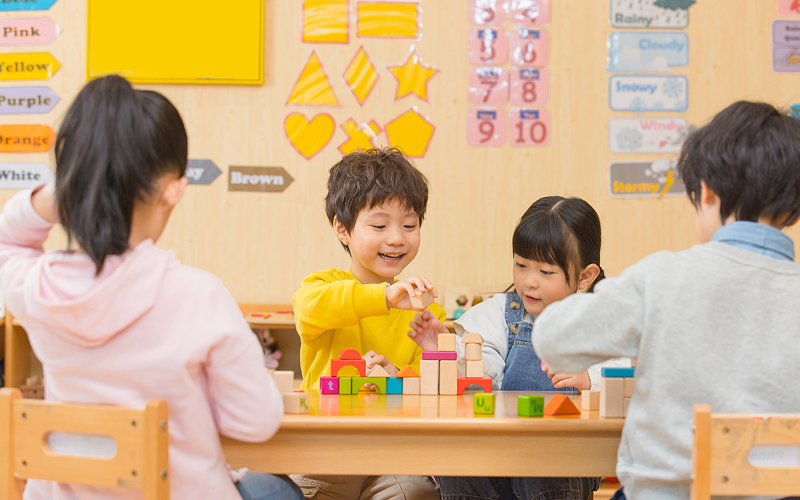
This learning approach allows teachers to monitor progress more dynamically than traditional drilling. Instead of relying on written output alone, teachers can observe how children respond in real time, whether they hesitate when recalling a word, confuse tones, or struggle to apply vocabulary in context. This makes it easier to identify specific gaps in understanding and provide immediate feedback.
For parents, learning through games provides clearer insight into how their child is progressing, beyond what can be seen in written work. Observing participation, confidence, and responsiveness during activities offers a more complete view of language development, making it easier to reinforce learning at home.
How Choice Hua Sheng’s Method Supports
At Choice Hua Sheng Education Centre, new vocabulary is introduced and reinforced through game-based learning, particularly for N2-K1 learners. Each
preschool Mandarin lesson plan is designed around different themes. For example, L1 and L2 focus on occupations, where children role-play as nurses or doctors. They also engage in related handicrafts, such as making nurse hats, to create an immersive experience that reinforces the vocabulary and concepts in a hands-on way.
Short revision sessions may use flashcards, but the primary focus is interactive learning that strengthens:
- Word recognition
- Tone awareness
- Comprehension
- Active recall
For parents seeking an effective
Chinese enrichment class for K1 or N2, our lessons offer a method that nurtures both competence and enthusiasm for learning Chinese.
Get in touch to learn more about our programmes.






 Choice Hua Sheng