
Key Takeaways:
- Chinese characters are built using six main structural types that help explain meaning, sound, and formation patterns.
- Pictograms and ideograms help children understand meaning visually through simple and abstract representations.
- Compound ideograms encourage logical thinking by showing how character parts combine to form new meanings.
- Phono-semantic characters are the most common and help learners recognise pronunciation patterns in new words.
- Loan and transfer characters show how Chinese evolves over time, making the language more dynamic and contextual.
Introduction
Chinese characters may look complex to young learners, but they are built on clear and meaningful patterns. For thousands of years, Hanzi (汉字) have been structured using six foundational Chinese character types, each offering clues about meaning, structure, or pronunciation.
For many parents, the main challenge is helping children make sense of these characters in a logical way. This often involves moving beyond memorisation and guiding children to understand the underlying patterns in the language. To further reinforce these foundations, structured Chinese tuition lessons in Singapore can provide a more guided and consistent learning approach.
What are the 6 Types of Chinese Characters?
1. Pictograms (象形字 xiàng xíng zì)
Pictograms are the earliest form of Chinese characters. Based on simple drawings of real objects, they are often the easiest for children to recognise. As they resemble what they represent, children can understand how written Chinese developed from visual images.
Examples:
山 (mountain)
水 (water)
日 (sun)
目 (eye)
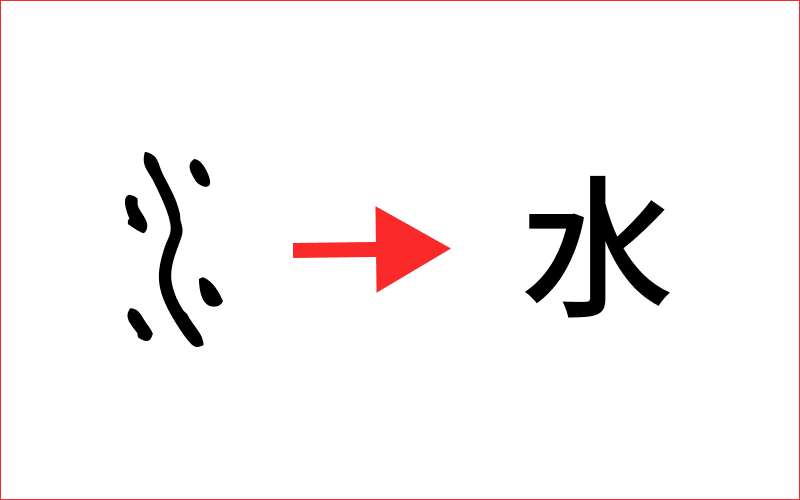
Tips for Parents:
A helpful approach for parents is to first show the original picture form of the character, then gradually guide children to see how it has evolved into its modern written form. This step-by-step visual comparison helps children connect meaning with structure more easily.
2. Simple Ideograms (指事字 zhǐ shì zì)
Simple ideograms use basic symbols or visual markings to represent abstract ideas. They help children understand concepts such as direction, quantity, and position through simple, clear visual cues.
Examples:
上 (up)
下 (down)
一 (one)
二 (two)
Tips for Parents:
Parents can use hand gestures while explaining to make abstract ideas more concrete for children. When movements are paired with meaning, children can better visualise the concept. This helps strengthen understanding and support longer-term memory retention.
3. Compound Ideograms (会意字 huì yì zì)
Compound ideograms are formed by combining two or more characters to create a new meaning. This structure encourages children to break down each component and think about how the parts work together to form a complete idea.
Examples:
休 combines 人 (person) and 木 (tree) to suggest “rest”.
信 combines 亻(person) and 言 (speech) to represent “trust” or “truth”.
Tips for Parents:
Parents can encourage their child to think critically about meaning instead of memorising characters blindly. One effective way is to turn compound ideograms into simple puzzles. For example, when your child learns the character 休 (rest), you can break it down into 人 (person) and 木 (tree) and ask, “What do you think it means when a person is near a tree?”
4. Phono-Semantic Characters (形声字 xíng shēng zì)
This is the most important category, making up over 80% of all Chinese characters. These characters combine a meaning component and a sound component.
Examples:
妈 (mother) includes 女 (female) and 马 (sound element)
洋 (generally means ocean) includes 氵(water) and 羊 (sound element)
Once children understand this system, they begin to recognise patterns in pronunciation. For instance, in Chinese language tuition, teachers may show that characters like 妈 (mā), 吗 (ma), and 马 (mǎ) share the phonetic component 马. The goal is to help students notice how similar parts often signal similar sounds, making it easier to guess pronunciation when encountering new characters.
Tips for Parents:
Parents can point out a phonetic component (for example, 马) and then show related characters such as 妈, 吗, and 马, reading each one aloud with the child to highlight the shared sound. They can also ask the child to underline the repeating component in worksheets and practise saying the words together in short repetition drills.
5. Loan Characters (假借字 jiǎ jiè zì)
Loan characters are characters that were borrowed to represent words with similar pronunciation. Over time, meanings evolved or changed entirely.
Examples:
来 originally referred to “wheat”
麦 was later created to represent wheat more clearly
Tips for Parents:
When teaching children about loan characters, parents can treat these as interesting language facts. It is important to share them casually to spark curiosity rather than focus on recall. For example, they can explain that the character 自 (zì) originally represented a simple drawing of a nose, but over time it came to express the idea of “self” as the writing system evolved.
6. Transfer Characters (转注字 zhuǎn zhù zì)
Transfer characters are those whose meanings evolved from related origins but eventually became distinct. This category helps children understand that Chinese is not static but changes over time through use.
Examples:
考 (test) and 老 (old) were once closely linked but developed separate meanings
Tips for Parents:
Parents can explain transfer characters by showing how a character can have an older meaning and a newer meaning, then have children compare the two side by side. For instance, 北 (běi) originally showed two people standing back-to-back, but it is now used to mean “north”.
Why Understanding Chinese Character Types Helps Children Learn Better
Understanding the key character types gives children a structured way to approach Chinese. When children learn how characters are formed and why they look the way they do, they begin to recognise patterns in meaning, structure, and pronunciation.
This approach helps in several ways:
- It reduces memorisation by introducing logic and patterns
- It improves reading recognition and fluency
- It strengthens memory through visual associations
- It builds confidence in writing and comprehension
How Choice Hua Sheng Education Centre Supports Learning
The six Chinese character types offer a meaningful way for children to understand how Chinese is structured. Instead of viewing characters as isolated symbols, learners begin to see patterns, logic, and connections that make the language easier to learn over time.
At Choice Hua Sheng Education Centre, learning is designed to help students build this foundation through structured and engaging methods. As a quality Chinese tuition centre in Singapore, we align closely with the Ministry of Education syllabus while also focusing on a deeper understanding of how the language works.
Through visual aids, storytelling, and guided writing practice, students are gradually introduced to Chinese character types, strengthening both understanding and application. This step-by-step approach helps them connect classroom learning with what they encounter in school, making progress more consistent and meaningful.
Get in touch to find out how our programmes can support your child’s Chinese learning journey.


 Choice Hua Sheng