
Introduction
Many children in Singapore find Chinese challenging because lessons often rely on memorisation and feel disconnected from daily life. Characters are practised repeatedly, yet meaning and usage are not always clear to young learners. This disconnect can cause children to associate Chinese with pressure rather than understanding, especially when early experiences feel rigid or overwhelming.
Limited home practice and low confidence when speaking Chinese can further weaken their interest. In English-dominant households, Chinese is often heard only during lessons, leaving children with few opportunities to use the language naturally. Over time, this lack of exposure affects pronunciation, vocabulary recall, and willingness to participate in class.
Interactive learning provides a much-needed shift. Instead of focusing solely on repetition, this approach prioritises participation, context, and engagement. Children are encouraged to respond, explore, and express ideas using Chinese in ways that feel natural to them. This approach builds confidence, expands vocabulary, and makes learning Chinese a joyful, engaging experience. When children enjoy the process, they are more likely to stay motivated, retain what they learn, and develop a positive long-term relationship with the language.
This article explores why interactive learning has become a key component of early childhood Chinese education in Singapore. Let’s also look at how some Chinese tuition centres in Singapore are slowly integrating interactive lessons alongside structured learning.
Key Takeaways:
1. What is interactive learning in Chinese education?
This approach involves children actively participating through speaking, listening, movement, and problem-solving rather than memorising content passively. It helps children experience Mandarin in real contexts, making the language more meaningful and easier to retain.
2. How does interactive learning differ from traditional Chinese learning?
Traditional learning focuses on structure, character accuracy, and exam readiness, while interactive learning emphasises participation, understanding, and engagement. When combined, both approaches support accuracy as well as confidence and real language use.
3. Does engagement-driven learning help children speak Chinese more confidently?
Yes. Activities such as songs, storytelling, and group responses create low-pressure opportunities to speak. Repeated exposure in these settings helps children become more comfortable using Mandarin aloud and expressing ideas clearly.
4. How does engagement-based learning support vocabulary development?
Children learn vocabulary through stories, routines, and familiar situations rather than isolated word lists. Repetition across different contexts helps words become part of everyday language use instead of short-term memory.
Overview of Interactive Learning
What Is Interactive Learning?
It is an approach where children actively participate in the learning process rather than simply listening to a teacher or memorising facts. Lessons are structured to encourage response, discussion, movement, and decision-making, allowing children to engage with language in a meaningful way.
It encourages exploration, experimentation, and real-time engagement through activities such as:
- Story-based learning
- Educational games
- Music, role-play, and movement activities
- Digital tools like tablets, videos, and simple simulations
Instead of absorbing information passively, children experience what they are learning. They hear words used in context, see how sentences form meaning, and practise responding in ways that mirror real communication. As such, children begin to recognise Mandarin as a living language. This makes Chinese language concepts more relatable and easier to remember.
Interactive Learning vs Traditional Learning: How They Support Chinese Learning Differently
Traditional and interactive approaches serve different purposes in language development. Understanding how each supports learning helps parents make informed decisions about their child’s education.
Traditional learning helps children master strokes, characters, and grammar rules while building discipline and a structured understanding of the language. These methods remain valuable, particularly for literacy accuracy and exam alignment. A clear structure helps children recognise patterns and follow formal expectations in school.

On the other hand, interactive learning helps make Chinese feel fun, relevant, and approachable by encouraging children to participate actively. Through interactive Chinese classes that feature stories, play, and multi-sensory engagement, children are given opportunities to explore language in context, which supports stronger retention and understanding. This approach also nurtures confidence and creativity, allowing children to express ideas more freely and engage with Chinese in a meaningful way.
Interactive learning is not meant to replace traditional methods completely. In fact, it enhances them. Without structure, children may enjoy lessons but struggle with formal language accuracy later on. Without engagement, children may memorise content but lack confidence using it. When used together, both approaches support a well-rounded learning experience. Children can develop stronger communication skills, a deeper understanding, and a more positive learning attitude.
Why Interactive Learning Works for Young Chinese Learners
By engaging children in activities that encourage listening, speaking, and responding in context, interactive learning helps make Chinese more accessible. This approach aligns with how children naturally absorb language at an early age, supporting their understanding through participation, repetition, and meaningful use.
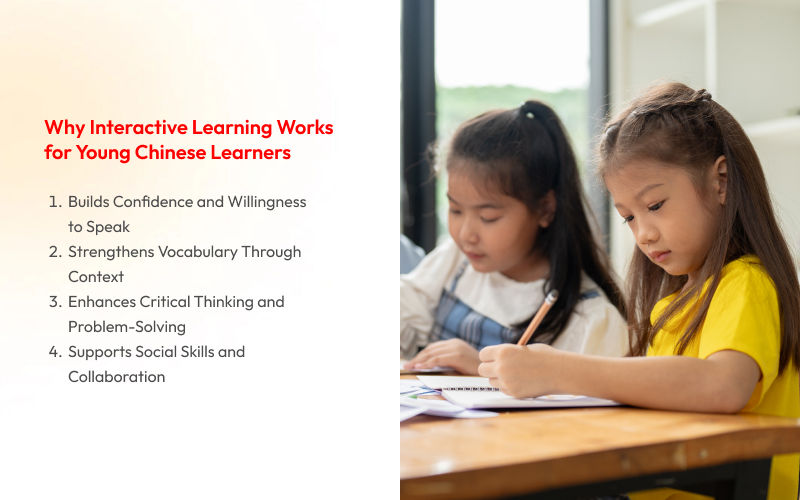
1. Builds Confidence and Willingness to Speak
Interactive Chinese learning activities lower the fear of making mistakes by shifting the focus away from accuracy alone and towards participation and expression. When children sing songs, act out familiar stories, or respond during playful group sessions, they are encouraged to use Mandarin without the pressure of being corrected immediately.
Over time, repeated exposure to speaking in these low-stress situations helps children internalise sounds, sentence structures, and common expressions. As Chinese becomes more familiar through use, children begin to respond more spontaneously and with greater clarity. This gradual build-up supports confidence in Chinese speaking, especially during oral expression.

2. Strengthens Vocabulary Through Context
Hands-on and story-driven lessons allow children to see how words are used in daily situations. When vocabulary is introduced through familiar contexts such as routines, stories, or simple problem-solving scenarios, children understand how it fits into conversations, instructions, and narratives. This helps them make meaningful connections between new words and real experiences, which strengthens comprehension.
When meaning is reinforced through actions, visual cues, and repeated exposure in different situations, words become part of a child’s working language. This approach supports Chinese vocabulary building by helping children use newly learned words more confidently and accurately in both speaking and listening tasks.
3. Enhances Critical Thinking and Problem-Solving
Open-ended questions, storytelling prompts, and collaborative tasks encourage children to think logically and creatively. They learn to describe ideas, sequence events, and respond to peers using simple but meaningful phrases. This process helps them make connections between ideas, predict outcomes within a story, and explain their thinking in a clear and organised way.
As these activities are repeated, children begin to rely less on memorised responses and more on understanding. These are essential foundations for reading comprehension, oral expression, and classroom participation in later years.
4. Supports Social Skills and Collaboration
Group activities help children listen, respond, share ideas, and negotiate meaning in a supportive setting. Through pair and group tasks, children learn to take turns, follow instructions, and adjust their responses based on what they hear from others. This process encourages active use of Chinese in social situations, reinforcing both comprehension and expressive skills.
As children become more comfortable communicating with peers, they gradually develop social confidence alongside language skills. This confidence supports clearer expression, more consistent participation, and greater ease in group learning environments.
Interactive Learning Methods That Work Well for Young Learners
What Singapore Parents Need to Know
Interactive learning has become increasingly relevant in Singapore’s early childhood education. Understanding how it fits within local curriculum expectations, home language environments, and cultural context helps parents make informed decisions about their child’s Chinese learning journey.
1. Aligns With MOE’s Emphasis on Joy of Learning
Singapore’s education landscape has increasingly emphasised learning through understanding. In recent years, the Ministry of Education (MOE) has highlighted the importance of nurturing curiosity, communication skills, and enjoyment in learning. This shift recognises that children who are actively engaged are more likely to develop strong foundations across subjects, including languages.
Interactive learning reflects this direction by reinforcing learning through participation and exploration, which aligns well with the developmental needs of preschool and lower-primary children. Listening and speaking skills, which are formally assessed from the early primary years, are strengthened when children have regular opportunities to respond, express ideas, and follow instructions in Chinese.
2. Helps Children From English-Dominant Homes Stay Connected to Chinese
For households that speak mostly English, Mandarin exposure for young learners can be limited. This makes it harder for children to internalise sounds, vocabulary, and sentence patterns. Without regular opportunities to hear and use Mandarin, children may understand basic instructions but hesitate to respond or speak independently.
Interactive learning helps bridge this gap by creating meaningful opportunities for children to hear, practise, and respond in Chinese. Through songs, stories, guided play, and conversational activities, Chinese is used repeatedly in natural contexts. This consistent, contextual exposure helps sustain Chinese learning motivation even when home usage is minimal.
3. Supports Lifelong Interest and Cultural Appreciation
Poetry recitals, cultural stories, and songs actively introduce children to Chinese heritage. Children listen to rhythmic language, repeat expressive phrases, and engage with familiar themes such as family, festivals, and everyday values. These activities help children connect Chinese to stories, traditions, and shared classroom experiences.
By encountering the language in meaningful cultural contexts from an early age, children form positive associations with Chinese. These early experiences shape how they approach Chinese in later school years, influencing their willingness to engage more deeply with the language later in school and beyond.
How Choice Hua Sheng Makes Interactive Learning Meaningful
Within Choice Hua Sheng’s comprehensive teaching framework, Chinese tuition settings emphasise engagement-based learning as a key element. Used alongside structured literacy practices, this approach helps children deepen understanding, stay engaged, and develop strong Chinese foundations. Instead of relying on a single method, our lessons integrate play, repetition, and guided instruction.
Here’s how young learners can benefit from our preschool Mandarin lesson plans and other programmes:
1. Interactive Storytelling Sessions
Children listen to lively Chinese stories and participate by retelling plot points, acting out key scenes, and responding to guided questions. Teachers scaffold responses so children can gradually express ideas using complete phrases. This approach strengthens comprehension, sequencing skills, and vocabulary application, while making Mandarin feel expressive and alive.
2. Chinese Nursery Songs and Poem Recitation
Singing nursery rhymes and reciting classic poems help children internalise tones, rhythm, and natural speech patterns in Mandarin. In our Chinese programmes for preschoolers, repeated exposure through music reinforces pronunciation accuracy naturally, without relying on drills. These activities build oral fluency, support memory, and introduce cultural appreciation in a joyful, confidence-boosting way.

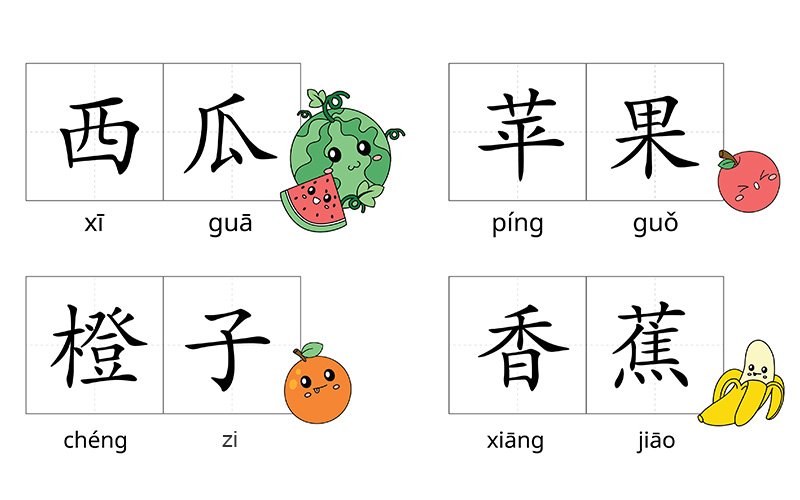
3. Vocabulary Games
Game-based word learning turns vocabulary practice into meaningful play. Children match characters, respond to prompts, and use visual cues to reinforce understanding. By doing so, they can recognise characters faster and recall them more accurately. With strong fundamentals, children know how to use newly learned words to form simple phrases and sentences with increasing independence.
Frequently Asked Questions
1. How does interactive learning help my child enjoy Chinese more?
Activities such as story reenactments, nursery songs, and poem recitations keep children engaged. These joyful experiences help them connect emotionally with the language, making Chinese lessons something they look forward to. This emotional connection plays a key role in sustaining interest during the early years.
2. Will interactive learning help with exams later on?
Yes. When children understand Chinese deeply, they perform better in reading, oral, and comprehension components. The confidence and vocabulary foundation supports smoother transitions into formal tuition and assessment-based learning in P1 to P3.
3. My child has a short attention span. Will engagement-driven learning help?
Yes. This approach is designed for active, curious children. Activities like games, songs, and movement tasks break learning into short, engaging segments. This keeps children focused longer and helps them absorb the language through repeated, enjoyable interactions, especially during Mandarin classes for kids.
Conclusion
Stories, songs, games, and joyful engagement play an important role in helping young learners in Singapore develop stronger Chinese language skills. Interactive learning allows children to experience Chinese as a living language. Through consistent participation, children strengthen comprehension, expand vocabulary, and build confidence while forming a positive emotional connection to Chinese.
While structured learning remains essential for literacy accuracy, learning through engagement adds depth, relevance, and motivation to the learning process. When both approaches are balanced thoughtfully, children gain a stronger foundation that supports long-term success in school and beyond.
At Choice Hua Sheng Education Centre, our Chinese tuition for preschools or broader learning programmes focuses on fostering higher engagement during these formative years. We aim to guide children beyond recall-based learning by helping them absorb language through enjoyable and meaningful experiences.
Get in touch to learn more about how we support your child’s Chinese learning.



 Choice Hua Sheng