

Key Takeaways:
- Learning through storytelling makes lessons more engaging, improving children’s focus and participation.
- The approach helps children build vocabulary and understand sentence structure through meaningful context.
- It strengthens reading and comprehension skills that are relevant for school assessments.
- It also encourages active participation, which boosts confidence in using Chinese.
- The process helps children form an emotional connection to the language, supporting deeper understanding.
Introduction
Learning Chinese can feel challenging for many children, especially when lessons rely heavily on memorisation and repetition. While these methods may help with short-term recall, they often do not build lasting understanding or confidence.
Through story-based learning, children can experience Chinese in a way that feels more natural and meaningful. By using narratives, characters, and relatable situations, they learn through context instead of memorising isolated words.
In this article, we explore how this approach helps children understand, remember, and use Chinese more effectively in everyday situations.
What Is Story-Based Learning?
This learning approach uses storytelling as the main method of teaching language concepts. Children listen to or read stories, interact with characters, and explore how events unfold. Through this process, vocabulary and sentence structures are introduced within a meaningful context. Rather than relying solely on drills, children begin to recognise patterns naturally and absorb the language more intuitively.
How Story-Based Learning Works
1. Making Chinese More Engaging and Enjoyable
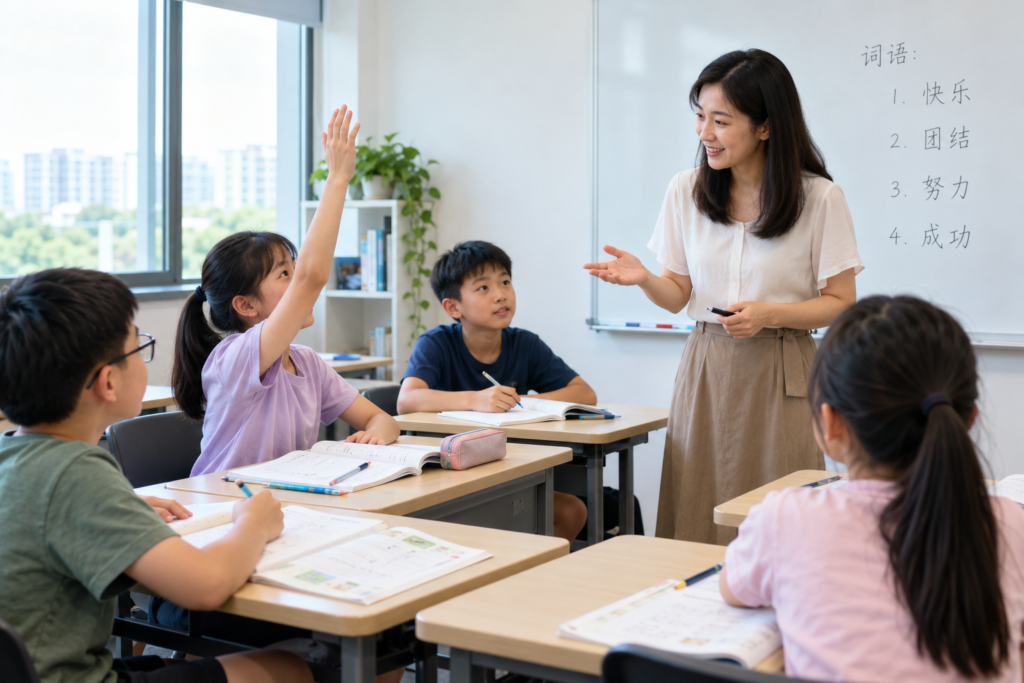
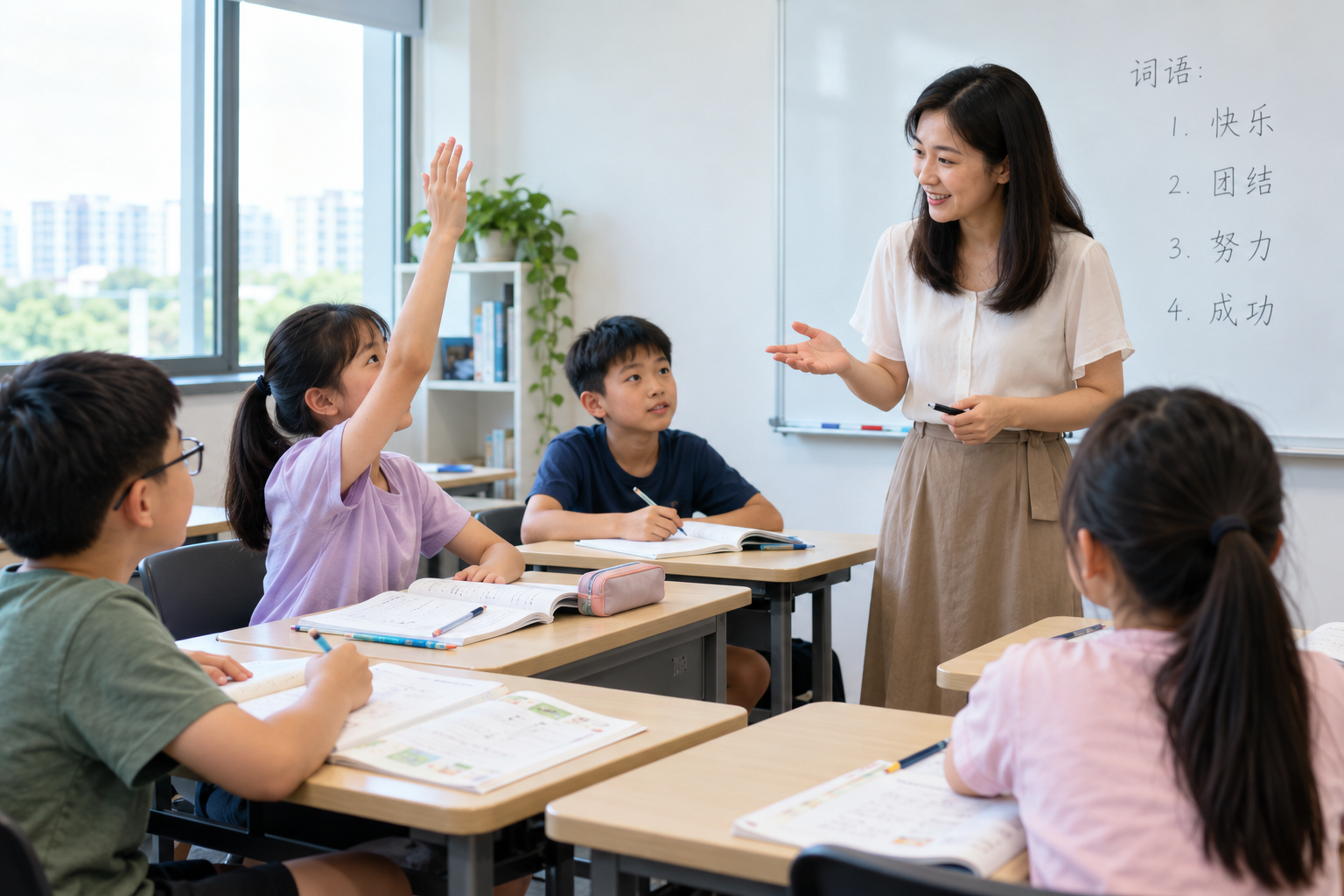
Children are naturally drawn to stories. From a humorous character to an interesting plot, storytelling captures attention in a way that traditional methods often cannot. Incorporating stories in Chinese classes for kids helps sustain focus and encourages participation.
When children are emotionally engaged, they are more willing to listen, respond, and use Chinese actively during lessons. This creates a more positive learning experience and reduces resistance towards the subject.
2. Improving Vocabulary and Sentence Structure Naturally
One of the key advantages of learning through stories is how it introduces vocabulary in context. Instead of memorising word lists, children encounter new words as part of a narrative.
This helps children understand how words are used in real situations. They begin to recognise common sentence patterns and build familiarity with grammar without feeling overwhelmed. Over time, language becomes something they can apply naturally in conversations, reading, and writing.
3. Strengthening Reading and Comprehension Skills
As children follow a storyline, they are not just reading for content, but actively making sense of how ideas connect and unfold. This process helps them develop essential comprehension skills that are directly relevant to school assessments.
Through guided storytelling, children learn to identify the main ideas within a passage and distinguish them from supporting details. As children begin to infer meaning from context, they can understand unfamiliar words or phrases without relying solely on memorisation. At the same time, they develop the ability to interpret character intentions and motivations. This helps strengthen their overall understanding of the text.
4. Encouraging Active Participation and Confidence
Active participation plays an important role in how effectively children learn a language. Storytelling supports this by moving children away from passive listening to more interactive learning experiences. As they engage with the lesson, they become more confident in using Chinese.
They may:
- Answer questions about the story
- Predict what happens next
- Act out scenes
- Retell parts of the narrative
This repeated interaction reinforces learning and builds confidence in speaking. It also helps children become more comfortable expressing themselves in Chinese.
5. Building Emotional Connection to the Language
Children are more likely to remember what they enjoy and relate to. Stories that include humour, everyday situations, and simple challenges help them resonate with the lesson. When children connect with a character or situation, they gain a clearer sense of how language is used to express thoughts and emotions.
For example, when a character feels nervous before a test or excited about a celebration, children learn how language reflects emotions. This helps them understand not just vocabulary, but how meaning is conveyed in different situations.

6. Developing Critical Thinking and Imagination
Besides language skills, learning through storytelling supports children’s cognitive development. This is because children are encouraged to think about cause and effect, compare characters, and interpret different outcomes.
As children follow a character’s experiences, they begin to understand how and why events unfold. This helps them connect ideas, consider different perspectives, and strengthen their reasoning skills. It also supports the development of critical thinking and imagination over time.
Why Story-Based Learning Works Well for Chinese
Chinese is a language that relies heavily on meaning, context, and visual imagery. This makes storytelling an effective teaching method. By combining structure with engagement, it supports both academic performance and genuine interest in the language.
Through stories, children can:
- Understand vocabulary within meaningful situations
- Reinforce sentence structures through repetition
- Improve tone accuracy by listening to natural speech patterns
- Build oral fluency through retelling and discussion
In the long run, this approach helps children move beyond memorisation towards confident and practical use of Chinese. It allows them to develop a stronger foundation for both school learning and everyday communication.
How Choice Hua Sheng Brings Story-Based Learning to Life
At Choice Hua Sheng Education Centre, we integrate this learning approach into lessons through interactive storytelling techniques. We offer Chinese tuition classes in Bukit Timah, Tampines, Serangoon, and other branches, providing convenient access for families across different locations.
Through our Chinese tuition lessons in Singapore, students explore engaging stories and take part in discussions and activities that reinforce their understanding. With lessons aligned to the Ministry of Education syllabus, they are able to stay on track academically while developing stronger language skills.
In addition, progress tracking and regular feedback help parents understand their child’s progress. This is supported by regular assessments and updates that highlight strengths, identify gaps, and guide adjustments to the learning plan.
Get in touch to check on our class availability.




 Choice Hua Sheng