
Key Takeaways:
What are Some Effective Ways for Children to Learn Hanyu Pinyin?
- Start early with a strong foundation in sounds, tones, and pronunciation to prevent long-term mistakes.
- Use a mix of listening, speaking, reading, and writing to reinforce how children learn Hanyu Pinyin effectively.
- Keep practice consistent through short daily activities, including songs, reading aloud, and simple conversations.
- Support learning with structured guidance, especially in early education settings, to build accuracy and confidence before Primary School.
Introduction
Hanyu Pinyin is the foundation of Chinese pronunciation. It helps children recognise sounds, produce accurate tones, and read with confidence before they begin Primary School. For many children in Singapore who grow up in English-speaking environments, Pinyin offers an accessible starting point as it uses the Roman alphabet. It is often a core focus in Chinese for preschoolers, helping children form accurate pronunciation habits from the start.
For parents looking to help their child learn Hanyu Pinyin, a structured and consistent approach is key. This article shares practical methods, tools, and tips to build strong pronunciation skills and long-term confidence in Chinese learning.
How to Learn Hanyu Pinyin Effectively
1. Start With the Basics: Understanding Initials and Finals
Pinyin syllables are formed by combining initials and finals. Initials refer to consonants, whereas finals are vowel combinations. While they may look familiar, many sounds do not match English pronunciation.
Children should focus on learning how each sound is produced rather than relying on what they already know from English. Sounds such as q, x, j, as well as zh, ch, and sh, often require guided practice. The ü sound is another area that benefits from early correction. A clear foundation at this stage prevents habits that are difficult to correct later.
2. Focus Early on Tone Recognition and Production
Chinese is a tonal language. This means the same syllable can have different meanings depending on the tone used. For children, this makes tone recognition an essential part of early learning. They need to become familiar with all four tones, along with the neutral tone, to build a clear and accurate foundation in spoken Chinese.
At this stage, children should learn to hear the differences between tones, match them correctly to syllables, and produce them accurately when speaking. Early and consistent exposure helps reduce confusion between similar-sounding words and supports greater confidence in everyday communication.
3. Build Accuracy Through Listening and Repetition
Listening is essential when learning Pinyin, as regular exposure to correct pronunciation helps children internalise sound patterns naturally over time. When children hear sounds consistently in the right context, they begin to recognise and reproduce them with greater accuracy.
Daily listening activities such as songs, short stories, or audio flashcards can make this process both effective and engaging. Repetition, especially through shadowing or repeat-after-me exercises, further strengthens pronunciation. Short daily practice sessions tend to be more effective than occasional long ones, as consistency is more important than duration.
4. Practise Reading Pinyin Aloud
Reading Pinyin aloud helps children connect written forms with their corresponding sounds, allowing them to build stronger fluency and confidence over time. As they vocalise each syllable, they begin to internalise pronunciation patterns more naturally.
Simple materials such as rhymes, word lists, or picture-supported readers are especially helpful for early learners. Regular reading aloud also reinforces tone accuracy and improves how children blend sounds smoothly when speaking.
5. Reinforce Learning Through Writing Activities
Although Pinyin is a phonetic system, writing remains an important part of the learning process. Putting Pinyin down on paper helps children become more aware of tone marks, recognise how different sounds are formed, and understand how syllables come together. This deeper engagement supports memory and helps children make clearer connections between what they hear and what they say.
Simple activities such as tracing Pinyin syllables, spelling exercises, or grouping similar sounds help reinforce learning. Writing also slows the pace in a beneficial way. This gives children more time to process sounds, notice tone placement, and improve accuracy in pronunciation and recall.
6. Use Child-Friendly Digital Tools for Daily Practice
Digital tools can make learning Hanyu Pinyin more interactive and engaging for children. Apps with audio features, pronunciation feedback, and simple games help reinforce learning outside the classroom while keeping children interested.
These tools work best when used to support what children have already learned through structured lessons, instead of replacing them entirely. Short, consistent practice sessions are more effective in maintaining interest and building steady progress over time.
7. Encourage Speaking Through Everyday Use
Children benefit most when they are given regular opportunities to use Pinyin in everyday situations. Applying what they have learned in simple, familiar contexts helps reinforce pronunciation. At the same time, it makes the learning process feel more natural.
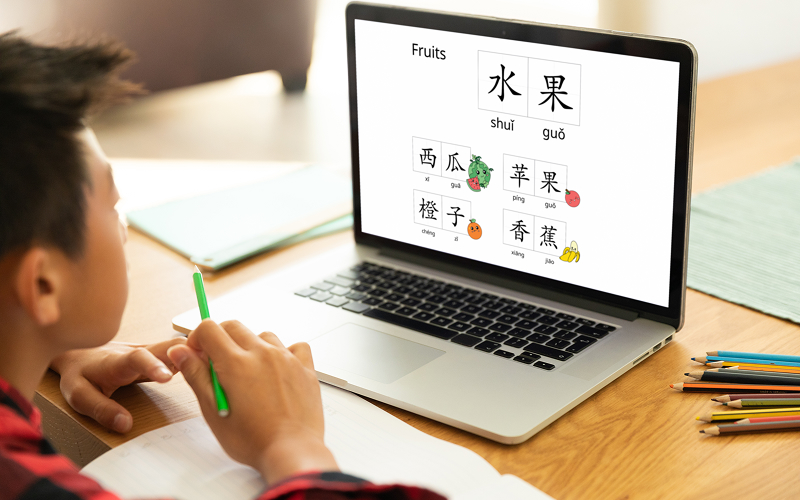
Activities such as naming objects at home, repeating short phrases, or practising basic conversations allow children to connect sounds with real-life meaning. For example, a child might name everyday items like “桌子 (zhuō zi)” or “水 (shuǐ)” or practise short exchanges like greetings with a parent. This consistent exposure builds confidence in speaking and helps them become more aware of how sounds are formed.
8. Provide Structured Guidance From Trained Instructors
Pinyin involves precise mouth shapes and tongue positioning, which are not always intuitive for young learners. Without proper guidance, children may develop incorrect pronunciation habits that can be difficult to correct over time.
Structured lessons offered through Chinese tuition for preschool students provide the support needed to build accuracy from the beginning. Trained instructors guide children on how sounds are formed and offer timely correction to ensure consistent progress.

How Choice Hua Sheng Builds Strong Pinyin Foundations
Helping a child learn Hanyu Pinyin is not about memorisation alone. It requires consistent exposure, guided practice, and a balance of listening, speaking, reading, and writing. At Choice Hua Sheng Education Centre, Pinyin is introduced progressively to support early language development.
In N2 and K1, students are exposed to Hanyu Pinyin within stories, helping them connect sounds with words naturally. By K2, lessons place a stronger focus on learning and practising Pinyin in a structured way.
Students are guided to develop:
- Accurate pronunciation
- Proper tongue positioning
- Clear understanding of all four tones
- Strong blending of initials and finals
Our Chinese tuition lessons in Singapore are designed to align with the Ministry of Education syllabus while incorporating interactive and engaging methods. Progress tracking and feedback also allow parents to monitor improvement and adjust learning support where needed.
Get in touch and let us help your child master pronunciation from the start.






 Choice Hua Sheng