
Key Takeaways:
Why Is It Important To Understand Chinese Stroke Order?
- Understanding stroke order helps children write clearly, remember characters more easily, and recognise patterns across new words.
- By following a structured sequence, Chinese becomes more predictable and less overwhelming for young learners.
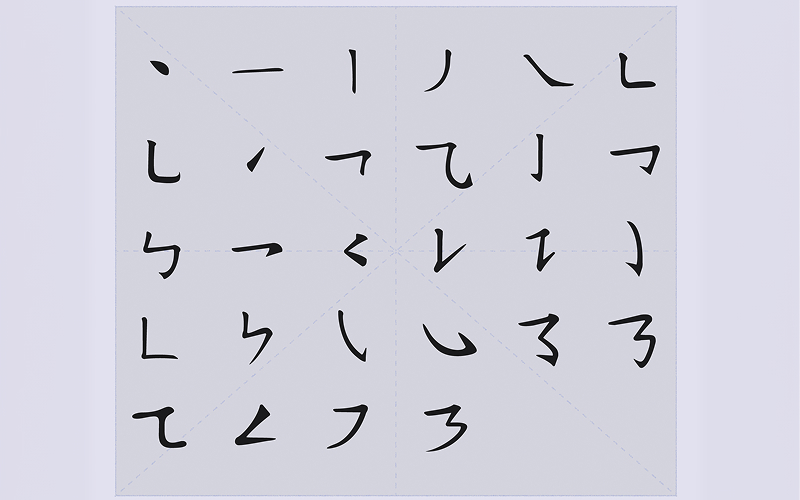
- Before writing full characters, children should first master the five basic strokes, as these form the foundation of most Chinese characters.
Introduction
Chinese characters can feel overwhelming for young learners at first glance. With their intricate shapes and unfamiliar structures, many children may wonder where to begin. The good news is that Chinese writing is not random.
Every character follows a set of consistent rules. Once children understand these patterns, learning becomes much more manageable. This is where Chinese stroke order plays an important role. By learning the correct sequence of strokes from an early stage, children can remember characters more easily and build confidence as they progress.
What Is Chinese Stroke Order and Why Does It Matter?
Stroke order refers to the correct sequence used to write each part of a Chinese character. Instead of drawing a character randomly, each stroke follows a logical order that has been standardised over time.
Learning the correct stroke order helps children:
- Develop clearer and more consistent handwriting
- Improve the memory retention of characters
- Recognise patterns across different words
- Read and write more efficiently
When children follow the proper order, they are not just copying shapes. They are learning a structured system that makes Chinese more predictable and less intimidating, giving them a vital sense of control.
A simple visual demonstration, such as watching the character “木” (mù) being written stroke by stroke, can help children see how individual lines come together to form a complete character. This step-by-step understanding builds both clarity and confidence.
What are the Basic Strokes Every Child Must Learn First?
Before learning to write full characters, children should first master a few fundamental strokes, as these form the building blocks of almost every Chinese character. This is especially important for young learners just starting out.
Here are the five essential strokes:
1. 横 (héng) — Horizontal Stroke
Visual: 一
Direction: Left → Right
Example: 三
This is often the first stroke children learn. It forms the base of many characters.
2. 竖 (shù) — Vertical Stroke
Visual: 丨
Direction: Top → Bottom
Example: 中
A simple but essential stroke that appears in many common characters.
3. 撇 (piě) — Left-Falling Stroke
Visual: 丿
Direction: Top-right → Bottom-left
Example: 人
This stroke introduces diagonal movement, helping children gain better control.
4. 点 (diǎn) — Dot
Visual: 丶
Direction: Top → Down/Diagonal
Example: 六
Small but important, this stroke teaches precision and placement.
5. 捺 (nà) — Right-Falling Stroke
Visual: ㇏
Direction: Top-left → Bottom-right
Example: 大
Often paired with 撇, this stroke helps complete balanced characters.
By mastering these strokes early, children develop the foundation needed to write more complex characters with confidence.
The Golden Rules of Chinese Stroke Order Made Simple
Once children are familiar with basic strokes, they can start applying simple rules that guide how characters are formed. These rules reduce the need for memorisation and help children approach new characters logically.
Key principles include:
- Top before bottom
- Left before right
- Horizontal before vertical
- Outside before inside
- Close the frame last
For example, when writing a character with an outer box, children learn to write the sides first and close it at the end. This structured approach allows them to break down even complex characters into manageable steps.

Instead of guessing how to write a word, children begin to recognise patterns and apply rules consistently.
How Correct Chinese Stroke Order Builds Long-Term Memory
Many parents focus on how many words their child can memorise. However, how a child learns those words is just as important. Following the correct stroke order strengthens muscle memory.
When children write characters repeatedly in the right sequence, the movements become automatic. This makes it easier for them to recall characters during:
- 听写 (spelling tests)
- Composition writing
- Reading comprehension tasks
Over time, children also begin to recognise smaller components within characters, known as radicals. These recurring patterns help them decode new vocabulary more quickly, improving both reading and writing skills.
Why Early Exposure Matters for Young Learners
When it comes to Chinese for preschoolers, early exposure to stroke order plays a part. At this stage, children are still developing fine motor skills and learning how to control their hand movements, so introducing stroke order early helps them build better writing habits from the start. It also reduces the likelihood of confusion or incorrect writing patterns later on, while giving them the confidence they need before entering Primary school.
Rather than memorising characters mechanically, children begin to understand how characters are constructed. This makes learning more intuitive, reduces frustration, and creates a more positive and engaging experience with the Chinese language.
What are the Common Challenges Children Face
Many children struggle with Chinese writing not because the language is inherently too difficult, but because they are not guided by a clear and structured system from the start. Without a proper foundation, characters may appear random and overwhelming, leading to uncertainty in both writing and recognition.
As a result, children often rely on memorisation rather than understanding. This makes it harder to retain what they have learned. Over time, this can affect their confidence, slow down their progress, and make Chinese feel frustrating instead of manageable. By identifying these common challenges early, parents and educators can provide the right support to help children build stronger skills and a more positive learning experience.
How Choice Hua Sheng Supports Stroke Order Mastery
Understanding Chinese stroke order is one of the first and most important steps. It transforms writing from a memorisation task into a structured process that children can follow and apply independently.
At Choice Hua Sheng Education Centre, stroke order is taught as a foundational skill rather than an afterthought. As a trusted Chinese tuition centre in Singapore, the focus is on building strong fundamentals that support long-term learning.
Children begin with basic strokes before progressing to full characters. Lessons are structured to align with the Ministry of Education syllabus, ensuring that students keep pace with school requirements.
What sets the programme apart is its approach:
- Interactive learning instead of rote memorisation
- Focus on writing, oral skills, comprehension, and composition
- Regular progress tracking and feedback for both students and parents
- Customised support to address each child’s learning needs
With regular practice and structured guidance, students build both accuracy and confidence in their Chinese writing. For parents exploring Chinese language tuition, establishing these fundamentals early can have a lasting impact. When children understand how characters are formed, they are better prepared to manage more advanced reading and writing as they progress.
Get in touch to explore how we can support your child’s learning journey.





 Choice Hua Sheng